TL:DR: Not a good option for carpets that are very soiled with real dirt/soil.
This is my personal review of CitruSolution carpet cleaning. I contacted the local franchise, paid with my own money, and didn't tell them I was going to write a review.
Background:
I'd been looking to get the carpets in my home cleaned again. I've cleaned them myself a few times with a Bissell hot water extraction unit. The Bissell gets them decently clean but it's a lot of work, I'm dead tired afterward, and it takes a whole night and part of a day for them to dry afterward.
I was particularly interested in finding a way to avoid wearing myself out while at the same time having the carpets dry when I got home or at least when I went to bed.
After studying all the options (steam/hot water extraction, "carbonated" extraction, and citrus based "buffing"), I ended up going with CitruSolution.
The Good:
The owner of the local franchise was FANTASTIC. His customer service skills are on the level I would have expected from Land's End before they were assimilated into the Kmart/Sears borg and ruined.
The cleaning process doesn't leave a lot of water in the carpet. They spray on what seems to be a mixture of water, alcohol and citrus extract (probably d-limonene). Then they go over it with a floor buffer that has a cloth bonnet on it. This leaves very little remnant water in the carpet. When the guys left, the carpets were just damp to the touch.
It does smell good if you like the scent of d-limonene and citrus cleansers. I've never been bothered by the scent of what I cleaned the carpet with but some people are more sensitive than others.
The guys who came to do the actual service were friendly and went about their business without much direction from me.
They left a bottle of spot/stain remover for me to have and use to keep the carpets "clean" between cleanings.
The Bad:
When they're done, the carpets aren't really clean. My high traffic areas were still visibly dingy. I'll post pics at the end of white towels rubbed over them with spot cleaner AFTER the carpets had been cleaned.
I never had that problem when using the Bissell. When I hot water extracted them previously with the Bissell, the high traffic areas would come out the same color as the rest of the carpet.
There were spots left in the carpet which did not come up during cleaning. Most of them I KNOW the guys had to have seen. A few were cola stains. A few others were latex paint stains from the painters who had been working in the house the week before. The latex paint stains I had even marked with painters tape and pointed them out directionally and verbally as I walked the guys through the house when they got here.
Apparently they don't (or at least didn't for me) pre-treat stains with anything like an oxy cleaner or strong solvent to help the citrus/alcohol/water solution do it's job. If citrus doesn't take it out, it ain't coming out!
[To remove the paint stains I ended up having to go to Lowes and get some Mötsenböcker’s LIFT OFF #5 Latex Paint Remover and remove the stains manually myself. To remove the coke stains, I sprayed them w/ peroxide and the, used the CitriSpot spot remover that they left me.]
Once the carpet had dried, I could tell it was cleaned with something that left a residue. It felt kind of "slick". I assume that was the citrus oil residue. I'm not sure whether that's a good thing or a bad thing. We'll have to see over time. At least with hot water extraction, I could make an extra pass with just water (or two) and know that pretty much nothing was left in the carpet.
I guess there's a reason we wash our clothes in a tank of water to get them clean. It seems the achilles heal of CitruSolution is actual dirt. Their system just isn't designed to deal with much of it. Dirt gathering capacity is limited directly by the absorbency of the cloth bonnet on the buffer.
Closing Thoughts:
If you got your carpets cleaned every month so there was never a build-up of dirt, this would likely be an excellent solution. Seems it would be good at keeping clean carpets clean but to actually clean dirty carpets, look elsewhere. I can see where this cleaning method would be especially attractive to hotels and restaurants that (should) get their carpets cleaned every month.
For specialty cleaning needs - like oil based stains - I have no doubt that the citrus cleaner probably cleans better than hot water + detergent.
For soil, soda, and most kid generated stains, citrus cleaning is NOT the best solution.
Me personally, I don't think I'll be using CitruSolution again.
Post Script:
I was so dissatisfied that I called the local franchise owner and asked for my high traffic areas to be thoroughly re-cleaned. If they can't get them clean, I will have no problem asking for at least a partial refund and re-cleaning them myself with the Bissell.
Here are some pictures of white towels from my kitchen that were pure white. I sprayed some of the CitruSpot cleaner they left on the high traffic areas and rubbed with a couple towels. Here are the results:
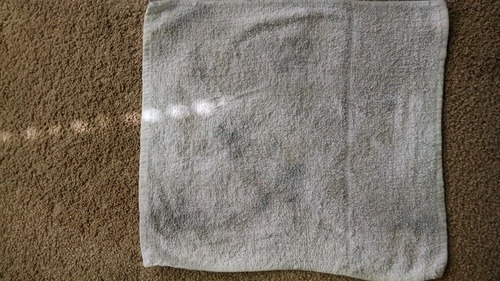
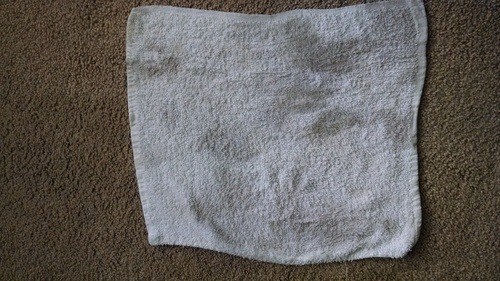
Notice all the dirt that came out on my clean towels? Yep, that's what CitruSolution left in my carpet.
If their own spot cleaner can remove it, it simply proves their bonnet extraction process is insufficient to actually CLEAN dirty carpet.


 Is it time for the U.S. Congress to systematically investigate the oil futures market?

